Showing posts with label beef. Show all posts

Tuesday, 4 May 2010

The Cambridge Menu

The brief from BBC Radio Cambridgeshire was simple: create a dish that sums up the area using the best locally sourced produce available.


Cornwall has the pasty, Bedfordshire’s got a clanger and Bury the black pudding – but Cambridge? Cambridge has…well, therein lay the problem. Our county is bereft of a classic.

The challenge to rectify this glaring omission came from our local BBC radio station. I would have a week to come up with something special and they’d then record me creating it in my own kitchen.

The obvious place to begin was looking at what local produce was available. It soon became clear that the area may be lacking in a signature dish but that isn’t for want of superb ingredients: locally reared beef, pork, lamb and game are plentiful, when in season.


In May, the Fens groan under the weight of the asparagus spears that peep through the earth. Celery and watercress also grow in plentiful abundance. The committed and enthusiastic loca-vore can even take their rod and line down to the River Cam and try to land a pike or zander. However, I didn’t think a week would be enough to organise a fishing licence (or actually learn how to fish).

Being bound to the fruits of the local land was no hardship, though and after a few days of hard research I came up with the following efforts for my Cambridgeshire Feast. Great British Menu, watch out.

Starter: Asparagus, bacon and egg
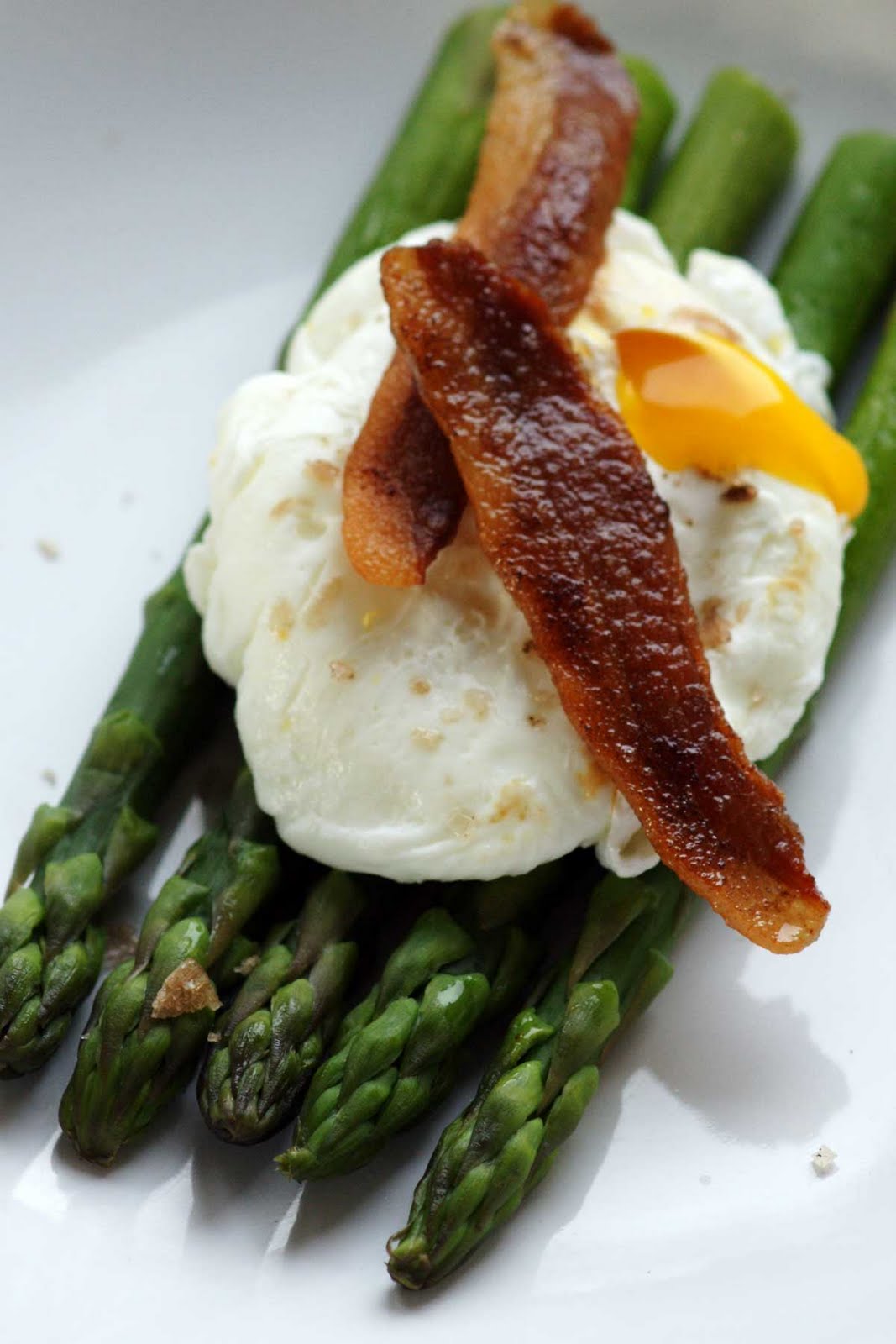


With it just sneaking into season, now is a great time to eat locally grown asparagus. The spears are sweet and tender and are yet to develop the slightly woody note that can tarnish the fern later in the year.

This isn’t a very original presentation but my goal was to keep it simple. The asparagus was steamed, brushed with butter then served with an egg (from our front garden) poached at 64˚and a couple of slices of home-cured pork jowl, uniquely preserved by the Cambridgeshire air and then fried until crispy like dry-cured streaky bacon.

Main Course: Beef cheeks, braised celery and Stilton and mustard cream


Beef and Stilton is a classic combination. Stilton and celery, likewise. Here they come together in a wonderful open pie.

Whilst most regions in Britain can lay claim to a local cheese, Cambridgeshire’s most famous dairy product can’t actually be made in the county. The PDO that proudly adorns Stilton cheese limits its production to the three counties of Derbyshire, Leicestershire and Nottinghamshire – but the town of Stilton itself lies within the boundaries of modern-day Cambridgeshire and here is where the cheese became justifiably famous.

Beef cheeks (from CamCattle, a company who locally rear cattle grazed on common land in the centre of Cambridge) were cooked slowly in red wine and stock with carrot, celery, onions and garlic until tender – then the cooking liquor reduced to a rich and sticky gravy.

The celery too, was braised by browning in a little butter then covering with a light chicken stock before being vacuum sealed and cooked for 35 minutes at 85˚ (the temperature at which pectin – the ‘glue’ that holds vegetables together –breaks down, making vegetables tender but ensuring they retain a little bite).


The celery and beef were topped with a disc of puff pastry and then a cool cream flavoured with Stilton and mustard was added to the dish, along with a some watercress for a peppery bite.

It may be a little optimistic to hope it’s a future classic, but one can always hope. It’s certainly delicious enough to warrant making again, very soon.

Dessert: Cambridge Burnt Cream with Rhubarb

Perhaps better known as crème brulee, this dessert was the closest that I came to finding a genuine heritage dish from Cambridge. Although the veracity of the origins of the dessert cannot be verified, legend has it that it was first served at Trinity College in the late 19th Century – a tale that Ian Reinhardt, head of catering at Trinity, was happy to stick to. As am I.


Rhubarb seemed a natural addition – both because it can be found all over the region at this time of year and also due to its natural affinity to custard: a pairing that almost universally tends to remind us of childhood.

Deceptively simple, the secret to a perfect ‘Burnt Cream’ lies in setting the custard to a soft texture without scrambling the egg yolk. Just don’t get it too hot.

Split a vanilla pod and add the seeds to 425ml double cream and gently bring to the boil. Whisk together 110g caster sugar with four egg yolks until pale then pour the cream over the yolks and sugar. Return to the heat and bring almost (but not quite) to the boil.

Pour the custard into ramekins and cook in a low oven (or bain marie) until set. Chill then sprinkle the tops with sugar. Use a blowtorch or hot grill to caramelise the sugar then cool.

For the rhubarb, melt 25g butter and 25g sugar in a pan. Add the sliced rhubarb then cover with orange juice. Cook until the rhubarb is tender (about 7-8 minutes), remove and reduce the liquid to a glaze to spoon over the soft rhubarb.


One final flourish that Ian kindly shared with me when I went to speak to him about the origins of this tasty pudding concerned the ‘branding’ of the caramelised sugar with a metal plate adorned with the college crest. A piece of theatre indeed, but perhaps a little extravagant for the home cook – at least, until I get my own coat of arms commissioned.

So – thoughts? Feedback? Outrage that I’ve missed a truly local classic? Get in touch in the comments or on Twitter and we’ll have a chat about it.

To listen to my Cambridgeshire menu appear on BBC Radio Cambridgeshire, click here (next 7 days only). It's at the 1 hour 20 ish mark. Just after Feargal Sharkey.

Pictures by @photolotte (flickr)

Wednesday, 24 March 2010

Celebration Steak

As weeks go, the last seven days have been quite surreal.

There’s not much that can prepare you for making your debut on national television. It’s a little like getting onto a rollercoaster in the dark with no clue as to how the ride will pan out.

Thankfully, there have been no major hiccoughs. The heats and quarterfinals have been safely navigated and I’ve come out the other side as a MasterChef semi-finalist. It’s truly wonderful to be able to write those words.

The response has also been fantastic and genuinely heart warming. Thank you to everyone who has phoned, written, texted, emailed, tweeted or shouted across a car park. Thanks even to the person who suggested I might be Chris Martin and Stephen Merchant’s offspring (but only because you’re a Radio 1 DJ).

But my favourite response has been this:


It was quite a surprise when we pulled up in the car park at the butcher/farm shop/deli/food nerd’s nirvana that I go to and saw that sign, usually reserved for far more important matters like proclaiming the arrival of the season’s first rhubarb or new potatoes.

We were there to pick up a meal worthy of a celebration - and to my mind few things shout ‘hooray’ better than a whopping great steak. Whilst individual pieces are all well and good, practicality, economy and taste favour a shared piece of beef, especially if cooked rare and sliced tableside.

A hearty single rib (côte de boeuf if you wish to get all Gallic about it) from a Red Poll raised a mere four miles away was ideal. Aged just over four weeks the meat was dark red and looked tender enough to eat as was. Instead it was liberally seasoned, vacuum packed and submerged in a water bath to bob around merrily for a couple of hours at 52 degrees.


The logistics of the operation presented some slight problems: on realising that my largest pan was not big enough the bone had to be trimmed away and the rib-eye seared on both sides for about five minutes in order to put a tasty crust on the outside.


It was served with chips, an artery-clogging amount of béarnaise sauce and a heap of steamed broccoli as a concession to health - although once dipped into the rich buttery sauce the beneficial effects were possibly negated.


After waiting two and a half hours for a steak there was little that could have prevented us from falling on it like a pack of wolves hence the distinct lack of well composed, perfectly lit photographs.

In this case the lack of picture says a thousand words.

* * *
The MasterChef quarter final can be found here, on the BBC iPlayer and the first of the semi finals will be broadcast on BBC1 on Friday 26th March at 7:30pm.

And I'm also on Twitter.

Monday, 15 March 2010

Beef & Stout Pie

The transformation of ‘stew’ to ‘pie’ by the simple addition of a pastry case or lid is a great one.


Although little more than starchy filler, hiding slow cooked meat within the confines of a flour and fat housing does wondrous things to the contents. Wondrous, magical things.

A cheap staple food with a lengthy and sometimes less than illustrious history, the pie has undergone a renaissance of late. Artisanal and gourmet offerings now jostle for space alongside mass produced efforts with less than stellar provenance. The pie is becoming a shining beacon of all that is great about British food. Hearty, wholesome and delicious. Food we should rightly be proud of.

The most satisfying of pies, though, are the ones that you nurture yourself. A tender, slow cooked meaty filling and a suet exterior that manages to be both crunchy and yielding at once. A barely audible crack as the pastry gives to the pressure of cutlery and a waft of richly scented steam as the contents spill out onto the plate.

‘Double carbing’ is a point of contention. In most cases desire trumps sensibility and a mound of buttery mash will be on hand to capture the gravy. If not then a couple of slices of bread, generously spread with butter, will be needed to mop up the overflow. Once you’ve gone for pie, you may as well ignore the guilt.

The best meat for cramming into pastry is a cut that needs slow cooking. Chuck steak, brisket, oxtail or short ribs are all ideal but shin probably tops the list.

Beef shin, onion and mushroom pie


Half a kilo of boneless shin should be enough for four people and definitely won’t break the bank. Expect to pay no more than 3 or 4 quid.

500g boneless beef shin, cut into chunks
6-8 small onions, each about the size of a ping pong ball
Half a handful of dried mixed mushrooms – porcini and shiitake are ideal
A tablespoon of tomato puree
A couple of bay leaves and two sprigs of thyme
A can of stout – Guiness or Murphy’s are both good
500ml of stock, either dark chicken or beef
As many button mushrooms as you want, cut into quarters
Salt, pepper and Worcestershire sauce for seasoning

You will also need a favoured pastry recipe.

Peel and quarter the onions trying to leave the root end vaguely in tact.

Toss the beef in seasoned flour and brown in oil over a high heat, in batches if necessary so you don’t overcrowd the pan. Drain the meat on a couple of sheets of kitchen roll and brown the onions in the pan for a couple of minutes. Return the meat to the pot, add the tomato puree and cook for a couple of minutes before pouring in the stout and stock.

Poke the herbs and dried mushrooms into the liquid, cover with a cartouche and cook in a very low oven for 4-5 hours. Add the button mushrooms and cook for a further hour then remove from the oven and leave to cool whilst you make the pastry.

Line a large pie dish or a series of individual ones with the pastry, spoon as much of the beef and mushroom filling in as you can then top with more pastry. Brush with egg, poke a little hole in the top and cook for 35-40 minutes at 160-180 degrees centigrade.


Serve with peas and either mashed potato, bread and butter or both and a sticky onion gravy if you’re craving extra richness.

For more meaty chunks, follow me on Twitter

Wednesday, 10 March 2010

Beef Cheek Ragu


Beef cheeks can be a little hard to find. Legislation passed in the wake of the BSE scare of the mid 1990s meant they were completely off menu for quite some time and even now a quiet word in your butcher’s ear will likely be necessary to score the bounty.

A general rule of meat cookery runs thus – the more work it does, the longer it cooks. A beef cheek is probably the natural end point of the scale. There aren’t many calories in grass so – being a ruminant – a cow has to get through an awful lot before it feels full and it’s all got to be chewed. At least twice. That’s a lot of work.

The upshot of this is a supremely tasty fist-sized nugget of meat that can be braised in red wine and stock until it’s ready to be balanced on a heap of mashed potato and covered in a rich sauce. The slightest prod with the tines of a fork should have it collapsing into tender meaty strands.

It also makes a staggeringly good and achingly rich ragu. Done this way, two cheeks should be enough for four people.


Trim any excess fat or sinew from the meat, cut into chunks, season with salt and pepper and brown in hot fat in a casserole. Deglaze the pan with white wine vinegar then sweat down some finely diced carrot, celery and onion in olive oil.

Return the meat to the pan with the vegetables, add a large glass of red wine and a carton of passata and cover with a cartouche. Braise the whole lot in a very low oven for six hours by which point the volume of liquid will have halved and the meat should be falling into the sauce.

Serve stirred into pasta and be ready to pledge not to use minced beef again.

Wednesday, 28 October 2009

Five hour steak

The perfectly cooked steak is the holy grail of many chefs and home cooks.


For me a steak is a treat, a rare (no pun intended) but glorious treat. As a result if I cut into one that is overdone the disappointment can easily ruin the entire meal and the next thirty minutes will be spent in a deep sulk that only time and some well-cooked chips can offset.

The happy inverse of that is slicing through a piece of beef that is cooked to the ideal doneness – a quivering pink throughout with a crisp, charred and heavily seasoned exterior. Oh, the sheer delight.

I can think of few other gustatory pleasures that can measure up to a perfectly cooked steak.


Fillet, for so long the posterboy of the steak world, doesn’t quite measure up for me.

It may be tender but its leanness is also its Achilles’ heel. For the fat is where the flavour is and a muscle that has done no work (its position in the anatomy of the cow ensures this is the case) hasn’t enough depth for the truly discerning steak lover.

Instead I prefer a muscle that has worked, one that has led a life of hardship and built up a rich marbling and intense flavour as a result. Give me an onglet or bavette to work my teeth into over a chateaubriand any day of the week.

The problem with these cuts is they can be a little too tough. Served beyond rare they turn into slabs of meat that could resole a rudeboy’s Doc Martens. Even cooked momentarily, with a brief kiss of a searingly hot frying pan, the presence of connective tissue and sinew can offer a mandible workout of intense proportions.

Enter the water bath – a way of cooking meat to perfection. Every. Single. Time.

High end restaurants have long known about the benefits of cooking sous vide. Four or five years ago I ate a piece of lamb at Midsummer House, a two-star restaurant in Cambridge. It was delightfully tender and so flavourful I can still recall it now. I couldn’t quite believe it when I was told it had cooked for six hours. How was it still so pink inside? And uniformly so?

Thomas Keller is such a convert that he has written an entire book about the method. More top shelf gastro porn from the author of The French Laundry Cookbook and Bouchon.

I’d looked into buying the kit (called immersion circulators) to achieve the results at home but they were bulky and astronomically expensive – designed for commercial kitchens rather than the shoebox I have at home.

But then a couple of weeks ago I was sent one aimed at home cooks from these guys. It’s small, easy to use and delivers results you would expect in top restaurants.

And as someone who delights in the science of cooking and the potential of gastronomic experimentation, it is fast becoming my new favourite toy.

For beef junkies, skirt steak is the ideal cut. It’s incredibly tasty and bargain basement cheap. Cooked right it’s a joy to eat but its window of deliciousness is small. In other words, the perfect guinea pig for my first forays into sous vide.


Each piece was well seasoned with black pepper and sea salt then placed into a plastic zip-lock bag. Apparently sous-vide means ‘under vacuum’ so enter the vacuum cleaner. I sucked out as much air as I could then quickly sealed the top before dropping the whole lot into a stockpot full of water at 52 degrees.

Why 52? 50-60 degrees is the temperature window at which the meat proteins co-agulate, or cook. Pick a point between these two magic numbers and your steak will be between rare and medium rare and gloriously juicy.

And there it remained for five hours, bobbing up and down and gradually turning an unappetising shade of grey-brown before being removed and shocked in an ice bath to stop the cooking process.

A frying pan was heated to ‘scorching’ and a small drizzle of cooking oil – enough to cover the bottom – was poured in. Whilst it was coming up to temperature, the steak was seasoned again then cooked on either side for about a minute until a generously dark colour covered each side.


After a five minute rest on a warmed plate it was time to cut and see if experiment one had worked:


What surprised me most was the uniformity of the cooking. The meat was at the rarer end of medium rare all the way through. There was no gradation towards a pinker centre but the same colour throughout, aside from the dark brown crunch of the exterior.

The flavour was assuredly beefy, intense and unmistakably steak like. The outside crisp, rich and earthy and the interior almost sweetly bovine and wonderfully soft. Whilst the meat could have been slightly tenderer – which could be achieved over a longer cooking period – it offered enough resistance to be satisfyingly chewy.

It was, easily, one of the best pieces of meat I’ve ever tasted. From now on, for me, there is only one way to cook steak. Now, I wonder if pork belly will work…?

Tuesday, 2 June 2009

Barbecued Beef Short Ribs

[Project ‘Recreate New York Food’ to commence shortly. This is just shameless filler whilst body clocks return to normal and things like mountains of washing get done].

Forget everything you think you know about the rules of the kitchen. For just a few minutes.

This is just plain wrong. It shouldn’t work. Nearly every bodily fibre was screaming, shouting, balling at me to stop and obey the bloody rules. This method flies in the face of conventional cooking methods and tickles the scrotum of classical cuisine before running away and hanging out with the cool kids.


There are some cuts of meat that are user-friendly. They are fast, boneless and easy. The chicken breast. The fillet steak. The pork loin. A sprinkling of seasoning and a quick searing over a high heat and you have a tasty morsel ready for consumption.

Then there are those that need a little more care and attention. And time. Lots and lots of time. In general these are the cuts that I cherish (secretly I think most cooks do, at least those that really love their food).

They are the ones that are left on the bone, that need to be braised in liquid (wine is good. Always) until they are meltingly tender and rich, delicious and unctuous. Or roasted s.l.o.w.l.y.

But they are winter meats.

Now that the sun is here why would you want a hearty stew or daube Provençal?

As such, I thought the short ribs I have would have to remain in the freezer until the clouds roll in, the temperature drops and the desire for rich sauces and mashed potatoes returns once more.


Not so.

I picked up a copy of Gourmet magazine at JFK airport (‘The Grill Issue').

In it was a wonderful photo essay about a Mexican barbecue supper complete with recipes for a multitude of tasty treats. But one in particular stood out because it made me scratch my noggin and mutter: ‘There’s no way that could work. It goes against everything I know and cheekily tickles the scrotum of classical cuisine.’

Beef short ribs. Unmarinated. Unbraised. Unadorned. Just seasoned with salt and pepper then cooked over hot coals and torn apart by enthusiastic teeth. How could you not want to try that?


One of the best things about barbecue cookery is the purity of it. It’s as close most of us get to recreating the ancestral methods that live on in the collective memory. It’s just you and the fire, the ideal conditions for letting your inner Neanderthal out for an hour or two.

Which is great. And I’m all for delicately spiced fish wrapped in banana leaves or long marinated pork chops or skewers of vegetables drizzled in olive oil. But to really get to the heart of the purity of outdoor cooking all you need is a great hunk of meat.

If you’re going to do this, you might as well go all the way and release the caveman.

Enter the beef. Bones and all.

Seasoned in advance (ignore the hokum about only seasoning meat milliseconds before you are about to cook it), they were left at room temperature until the barbecue was seriously hot (hold your hand the coals about five inches up – if you have to move within 1-2 seconds, you’re at the right heat). Then it was time to cook them.


Where American short ribs tend to be cut across the rib, the English butcher them differently, giving single bones rather than a series of them dotted through the meat, much like the equivalent cut on a pig. It matters not. They need about three or four minutes on each side to really get that tasty browning before they can be moved to a cooler part of the barbecue to cook through.

Leave them for about fifteen minutes, turning occasionally. You have a lot of leeway with these bad boys. A steak can overcook in just a couple of minutes. These butch fellas can take it, begging for more. It’s like watching the cast of High School Musical take on a team of Jack Bauers (oh, I would give a minor appendage to witness that).


Once cooked leave them to rest for 10-15 minutes (absolutely freaking essential) – just the right time to dish up whatever it is you would like to accompany your feast. Salad? Perhaps not the best option. I’d go for beer. And maybe a mound of potatoes. Concessionary veg optional.


Season the meat again – just a little turn of black pepper and some sea salt and dig in. This isn’t dainty food. Use of hands is not just recommended, it is mandatory. The taste is incredible. I’ve never had a steak that tasted as good as these. Honestly. Not a single steak has ever come close. The flavour is intensely meaty, packed full of umami and downright deliciousness.

If you’re used to meat that is so tender it may as well have been pre-chewed then these will come as a shock. They offer up some resistance (hardly surprising considering they are the Jack Bauer of the food world) but in a really satisfying way.

I don’t want my food to fall apart in my mouth. My incisors and molars evolved for a purpose. Precisely this purpose: for tearing off mouthfuls of completely delicious beef, still on the bone and tasting exactly like beef should.

Naturally, I cooked too much. The rest were left over night then sliced thinly, still pink, to go into wraps the following day with some spicy beans, spinach, guacamole and chillis.

Anthony Bourdain has a term for food like this: It’s the sort of food that you would only serve to friends, and people you already know you are going to like. Put your inner sceptic to sleep for just one night, invite over some people you know will appreciate this (vegetarians need not apply) and make a long, long evening of it.

For more meaty mouthfuls, follow me on Twitter

Thursday, 23 April 2009

Braised Beef Short Ribs

Here’s a question for you: what do Geert Wilders, Lady Chatterley’s Lover, Straw Dogs and beef short ribs all have in common?

Any ideas? Yes, you at the back? Correct answer! They have all, at some point, been banned from Britain by the government.

Thanks to the BSE crisis – a result of abhorrent farming practices – for two years between 1997 and 1999, it was illegal to buy or sell beef on the bone.


Steaks were fine, burgers likewise, topside and rump all legal but a request for forerib or shin of beef would be met with sirens, a lock down and a near instantaneous crack SWAT team swooping in to make arrests.

Even after the ban was lifted, getting hold of beef short ribs was harder than quoting Darwin to a Jehovah’s Witness without being interrupted. As a result this dish has probably been on my ‘Must Cook’ list for longer than any other.

Short ribs have never managed to segue their way into the British collective culinary consciousness in the same way they have in France or the States. Ask for short ribs here and you are likely to walk away with pork rather than beef.

But that seems to be changing. Finally. Whilst it might still necessitate a special request to the butcher, you will likely to be able to source them rather leave empty handed. And this, I can now affirm, is a good thing. A great and wonderful thing.


Why? Because this is quite possibly the tastiest cut of beef imaginable, not to mention being one of the cheapest. For the price of a small piece of fillet, you could buy enough beef to feed at least eight. An entire slab of short ribs will set you back about 15 quid and that will feed a small platoon.

After some lengthy discussion (‘no, not rib of beef. No, not pork spare ribs.’ Et cetera et cetera) I finally managed to secure a good sized chunk with no clue as to what to do with it.

It was one of those trips to the butcher when I just went a little crazy and named all the pieces of meat I could think of that I’d never tried but always wanted to: Marrow bone, pork hand, lamb breast. They just kept coming. I’d only gone in for half a pound of mince.

But there it was. The biggest piece of beef I’d ever seen and no idea how to cook it. who to turn to in moments like this? Hugh? Gordon? Nigel? No. This was clearly a Keller moment.

For a cookbook that is notoriously complicated, there are moments of sublime simplicity in Keller’s The French Laundry book. His Parmesan Baskets with Goats’ Cheese Mousse is an exercise in near effortless minimalism. And a tasty one at that.

And so it is with his braised beef short ribs. The beauty of slow cooking is that you can let the ingredients – and the oven – work for you. People tend to avoid slow cooking because they see numbers like ‘4’ and ‘5’ followed by the word ‘hours’. In an era where we are time short, this seems like an extravagance.

But with slow-cooking the actual hands on time is close to zero. Some peeling, some chopping, some browning and then that’s it. You’re free to go.

And when the final result is so extraordinarily tasty it almost feels like cheating.


After separating the ribs along the natural lines they were seasoned liberally with salt and pepper, lightly dusted with flour and browned in a little vegetable oil closely followed by a crude mirepoix of leeks, carrots and red onion.


The whole lot went into the biggest pot I could find and was covered with red wine (choose a butch one, something with balls like a new world Shiraz or Cab Sauv), and half chicken and half beef stock (homemade beef, chicken from a cube).

Instead of a lid, Keller recommends a cartouche with a whole cut into the middle so that’s exactly what I did - a circle of greaseproof paper placed over the top of the bubbling mass which then went into a cool oven (125 degrees C) for four hours.

After twiddling my thumbs, doing a crossword, getting impatient and finally falling asleep, it was ready. Sort of. This being Keller there was still a fair amount to do. I’ll admit now I didn’t follow him to the letter. I went a little off road from here on in but it was getting late and I wasn’t trying to retain my Michelin Stars.

The meat was removed from it’s tasty bath and left to cool while the cooking liquid was drained and reduced by about three-quarters. While this was all going on I diced up some carrot, parsnip and swede and cooked them off in salted water.

‘Looks like school dinner vegetables,’ said the Girlfriend. I bet Thomas Keller doesn’t have to put up with those sort of comments. But she was sort of right.

The meat was cut into cubes fried off in a smidgen of butter and then added to the reduced sauce along with the veggies.

Anything rich, saucy and meaty, for me, shouts out for mashed potatoes (or pommes puree seen as we are going all haute cuisine) so we knocked up a swift batch of lazy-mash (put potato in microwave. Cook. Mash with butter, milk and seasoning) and then sautéed some spring greens.


The dish was topped off with a small disc of bone marrow, fried after being rolled in seasoned flour and then, finally, it was time to eat. And it was well worth the wait.

This is food so tasty that it makes you want to sing from high on the rooftops. It was revelationary in the finest and truest sense and all I can now do is urge, plead and beg you to go out immediately, find and cook some beef short ribs and then go forth and spread the word.

Fancy a few amuse bouches before the next installment? Follow me on Twitter