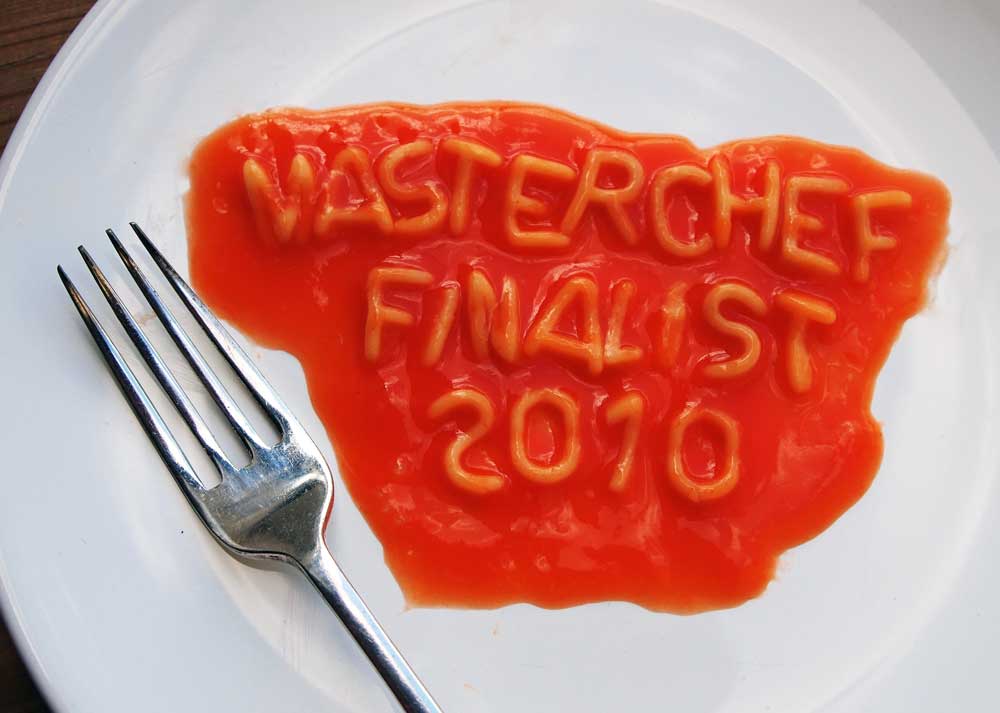
Wednesday, 21 April 2010

Observer Food Monthly Awards

Thankfully the Observer’s Food Monthly magazine received a stay of execution after the recent cull that saw the demise of its sister titles: Woman, Music, and Sport Monthly.

As a result food nerds, geeks and obsessives can still revel in the glory of unashamed nosh based writing from the likes of Jay Rayner, Rachel Cooke and Nigel Slater (amongst others).


Every year the OFM runs an awards special where readers can vote for the people and places that have rocked their food world over the previous 12 months.

Categories include ‘Best restaurant’ (my vote went to St John an admission that will surprise few) ‘Best independent local retailer (these guys, just outside of Cambridge who posted all the lovely Masterchef messages) and ‘Best cheap eats’ (oodles of noodles? Yes please)

Pootle over to the Observer website to cast your votes. There are prizes too if you need further incentive.

There’s also a ‘Best UK Based Food Blog’ category. Just saying, is all…

Tuesday, 20 April 2010

Two ways with Ox Heart

[Warning - this post contains offal]

It was supposed to be three.

Three ways with heart.


A hat trick of heart-y preparations to entice the brave and convert the wary whilst trying all the while not to scare off the timid.

The third of these was to be a long, slow braise. I had visions of spoon tender meat in a rich, beefy gravy similar to the French Laundry braised beef short ribs. The reality was a little disappointing.

Most meat that needs slow cooking is a network of fibrous muscle protein and connective tissue layered with strata of fat. As the meat cooks it becomes tender (due to the break down of the collagen) and very tasty.

A braised lamb shank is the classic example – cooked properly a gentle shove with a fork should have the meat collapsing off the bone like a tower block undergoing a controlled demolition.

But heart, I came to learn, is different. The meat is lean, tightly packed and without the necessary additions of collagen and fat that make a truly rib-sticking braise. Rather than falling apart into tasty strands, the meat constricts and seizes up into dense, rubbery nuggets that taste nice enough but texturally are not pleasant.

It was with a heavy heart (arf arf) that I admitted defeat on this one and fed the chunks to some very grateful cats who I doubt appreciated the time, effort and bottle of Cabernet Sauvignon that had gone into the dish.

So, two ways it is.


The first thing you notice about an ox heart is its sheer size. They are great, hulking vast rugby balls of meat. Weighing in at a shade under three kilos, even accounting for the necessary ‘trimming’, there is plenty of meat here. A similarly sized rib of beef would set you back around £45. A three-kilo piece of sirloin closer to £70.

The heart cost a tenth of the price – about £7. Even if it merely served to slake my curiosity it was still cheap.

Once the whole thing had been trimmed of anything that looked even vaguely unappetising (no mean feat considering its size), a third of the meat was thinly sliced to be marinated overnight, a third cut into chunks to braise and a third finely diced for a ragu.

The braise, being something of a failure as already discussed, is probably best not dwelled upon so we shall move swiftly onto the more successful preparations.

Ragu


The first of these was a simple ragu. Finely diced heart meat browned in oil then cooked long and slow with a soffrito of onions, celery and carrot, a little cured bacon, half a bottle of wine, some good beef stock and a tin of tomatoes.

Five hours under a cartouche in an oven barely warmer than a Swedish sauna was enough to create a tasty sauce that works well over pasta but isn’t even close to being as good as one made with cheek.

Far more successful though was the following:

Anticuchos

A South American preparation, anticuchos seems to be a fairly generic term for ‘meat on skewers’ and can be made with almost any type of meat. The most famed, though, are made with beef heart.


Marinated overnight in ground cumin, garlic, chilli and oregano mixed with olive oil and red wine vinegar, the thinly sliced heart is then concertinaed onto wooden skewers before being grilled over hot coals.


Cooked quickly like this means the meat has little opportunity to constrict and toughen up. The light charring of the barbecued meat adds a warm, deep savoury note and the marinade, pepped up with the sharpness of vinegar, really lifts the dish.


After 5-6 minutes over hot charcoal, the meat was picked off the skewer onto a hot flatbread and served with rocket, a few spoonfuls of mayonnaise and the leftover marinade cooked down with some tomato puree.


‘This is a conversion dish,’ claimed the GF, whose initial trepidation evaporated once she got a whiff of the hunger inducing scent that is created when meat is introduced to hot coals. ‘This is seriously good. Really good. Good enough to convince non-offal eaters, in fact.’

She was right. Anticuchos is the sort of food that you could easily dish up and dazzle with at a barbecue. Questions over provenance could easily be waved away with vague mutterings about ‘steak kebab’ until the hungry throng come back for seconds.

By that point they will already have undergone their Damascene moment. Oh, you are offal. But I like you

Sunday, 11 April 2010

'Still got the cake' - Life after Masterchef

It’s all over. Those weeks and months of hard work and secrets. The challenges, the travels, the interviews and (just occasionally) the cooking.


My time as a Masterchef finalist is done and I can look back with pride at what we all achieved: heaving hot boxes through the courtyard of a thousand year old castle; working alongside some of the best amateur chefs in the country and then progressing to the final and running a restaurant with two of the nicest chaps I could ever have hoped to meet; cooking Alain Ducasse’s own signature dessert and serving it to the legendary man himself (not to mention a table full of Michelin starred chefs); transforming offal and other seldom used cuts of meat into dishes fit for a prime time BBC1 cooking show. To name but a few of the once-in-a-lifetime challenges that we faced.


Except it’s not over. It’s only just beginning.

By Thursday morning my inbox was registering almost 700 unread emails that had come in since Wednesday’s final episode. Amongst them were job offers, enquiries from agents and, most lovely of all, messages from people I have never met. People who were kind enough to take the time to write and say how much they enjoyed the show and send their congratulations at my reaching the final.

Thank you to you all. I will reply, I promise - but I may be some time. In a real sense rather than an ominous Captain Oates sense.

There are a number of very exciting projects in the pipeline, amongst them a book and a restaurant - both of which, I must add, are in the very early stages of development. But as soon as there is more news, it will be announced right here on my blog.

So watch this space.


In the mean time, the chocolate and coffee pot recipe that dazzled the critics is available here, on the BBC Food website (but don’t freeze the espuma!). However, if you’re looking for something more hearty and warming, might I suggest this lamb breast recipe, which is currently slow-roasting in my oven, albeit a more spiced version. It’s amazing what you learn from cooking in India for a Maharajah.

Oh, and I’m on Twitter: please drop by and say hello.

Wicked-cool spaghetti pics by the amazing @photolotte

Sunday, 4 April 2010

A little more trumpet blowing...

For the first time in the history of Just Cook It, you can now read one of my recipes on the BBC Food website.

The roasted lamb rump with spiced date puree, glazed carrots and cinnamon cous cous that I cooked for the critics is available right here. Here’s hoping you like it as much as Jay Rayner et al did.


If you do try the recipe, don’t feel the presentation has to be fine-dining: it can easily serve as a hearty lunch or supper for a hungry mob – a big pile of cous cous topped with pink lamb and glazed carrots then smothered with a sticky lamb gravy. A nice twist on an Easter classic.

If you’ve still not had your MasterChef fill, there is also an interview with the three finalists in today’s Express.

The final starts tomorrow at 9pm on BBC1 with the most incredible on-location challenge that the show has ever featured: cooking breakfast al fresco battling 40 degree heat in a 500 year old mountain top castle. In Rajasthan, India. Oh, and we cook for some royalty, too. Don’t miss it.

Thursday, 1 April 2010

Interview

(Shameless self-promotion alert. Hey, I don’t get on TV very often so I’m making the most of it)

Ahead of tonight’s semi-final, here’s a little interview with me talking about food, cooking and John and Gregg.


If you would care to relive what has become known as the ‘WI Debacle’ then it’s available on iPlayer. If you’d prefer to sit tight and wait for the next instalment it’s on BBC1 tonight (1st April) at 8:30pm.


Oh, and have a decadent decadently long weekend x

Note: It seems that the video is too large for my little blog and is spilling over onto the sidebar. I don't know how to fix this. If you'd prefer to watch it without bits of text covering it, you can see it here instead